Monday, September 18, 2017
Viva Frida
5th grade Frida's are almost completed and I can not wait to see them all hanging up in the next week or so. This is one of those projects that always blows me away. The students' choices of imagery, and use of colors, and creative way to fill in their backgrounds always makes for such a beautiful class project that I am sure even Frida would be proud of.
6th Grade: Picasso Musical Instruments
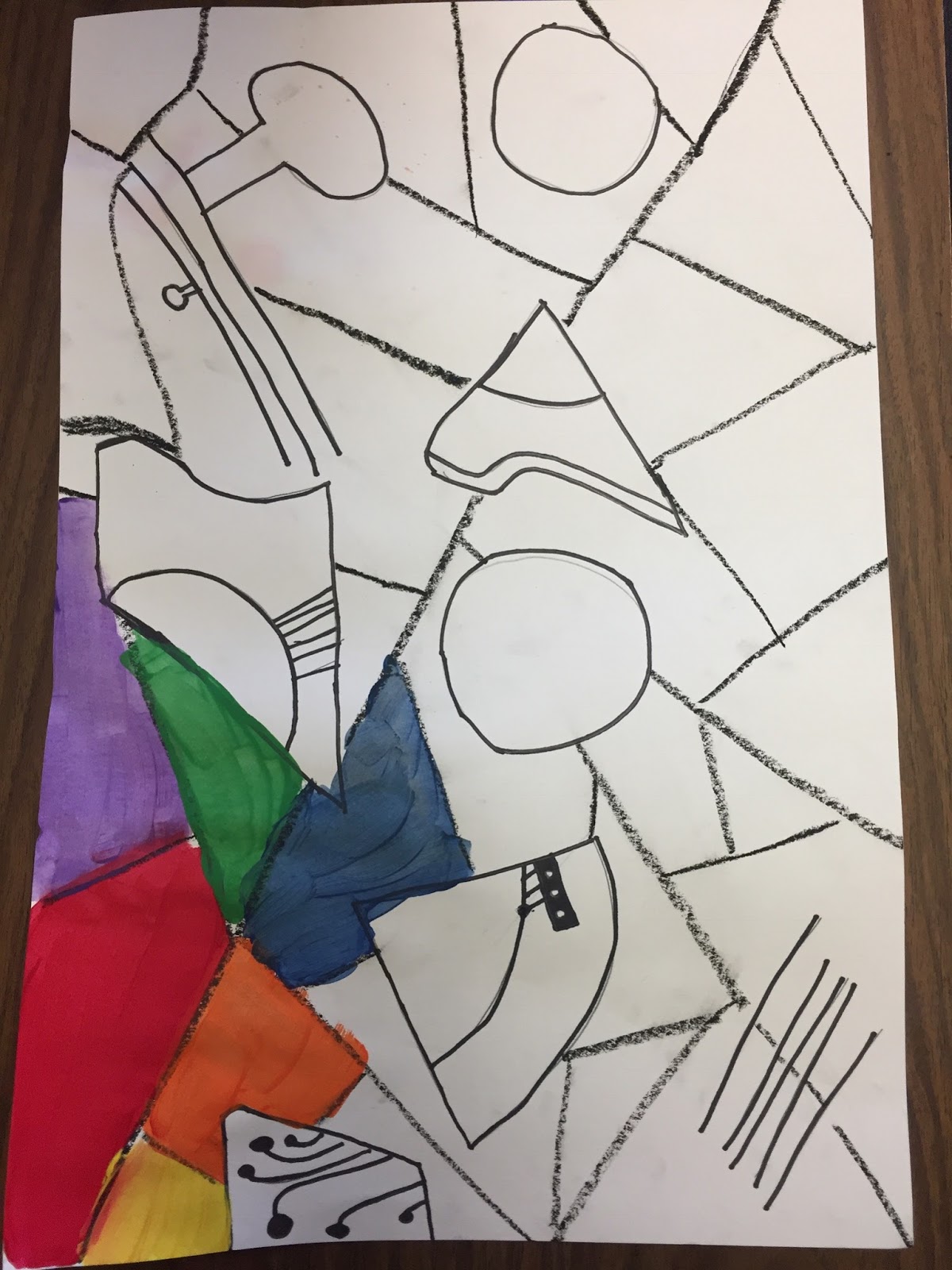
6th graders in both Spanish class and Art class are learning about the life and art of Pablo Picasso. Students already knew about Picasso and his style of portraiture from art lessons in previous years but this time we are taking a look at other subject matter that Picasso focused on, including musical instruments. We talked about cubism and how objects were deconstructed to create an abstract work of art. We spent a good deal of time discussing the importance of the viewers role when making a work of art. Making an art work that looks realistic is an important skill to have but sometimes creating art that doesn't tell the whole story is just as important to create an interest in a work of art. You need to engage the viewer and let them have their own experiences with the artwork. Spelling everything out for the viewer isn't always as interesting as letting them figure out the artwork on their own.
Below are some 6th grade artworks in their initial stages. The main goal of the project was to deconstruct an object in such a way that the object was not immediately discerned by the viewer.
Thursday, September 14, 2017
The Poor Lost Sippy Cup....
It took me having a child of my own to realize the possible implications of this missing and alone sippy cup that has been sitting in my art room this past week. I thought about the tears or the concern or the constant barrage of questions that may have come from the child that lost this sippy cup. I thought about the parent and the searching through the cars and the backpacks and the classrooms. So therefore, this sippy cup sitting alone in my classroom has weighed on my heavily this week. If this is your child's sippy cup, please know that it is in my classroom and is safe and sound and is waiting for it's forever home. I will give it a few more weeks before it makes it's way to the "lost and found", the needle in a hay stack search sitting in the hallway. Until then, it may be listening to a few Michael Jackson or Hamilton songs in my classroom. It might be watching me drink my 100th cup of coffee or prepping materials for each class...but it is happy....and safe. #adoptasippycup #needsaforeverhome #findingnemofindasippycup
Frescoes continued....
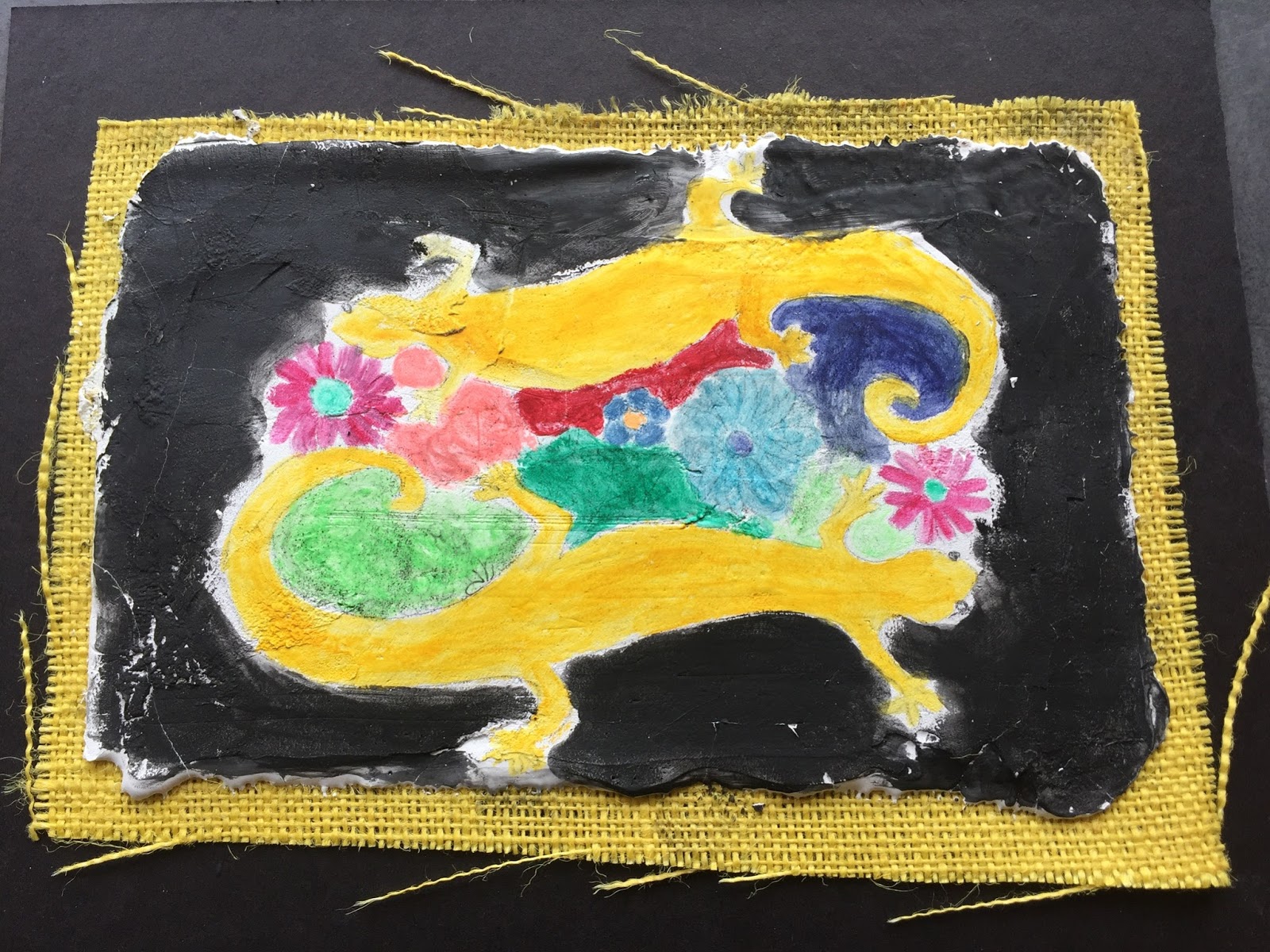
8th graders continue to work on their fresco projects this week in art class. Many have completed them this week.
A little bit about the process:
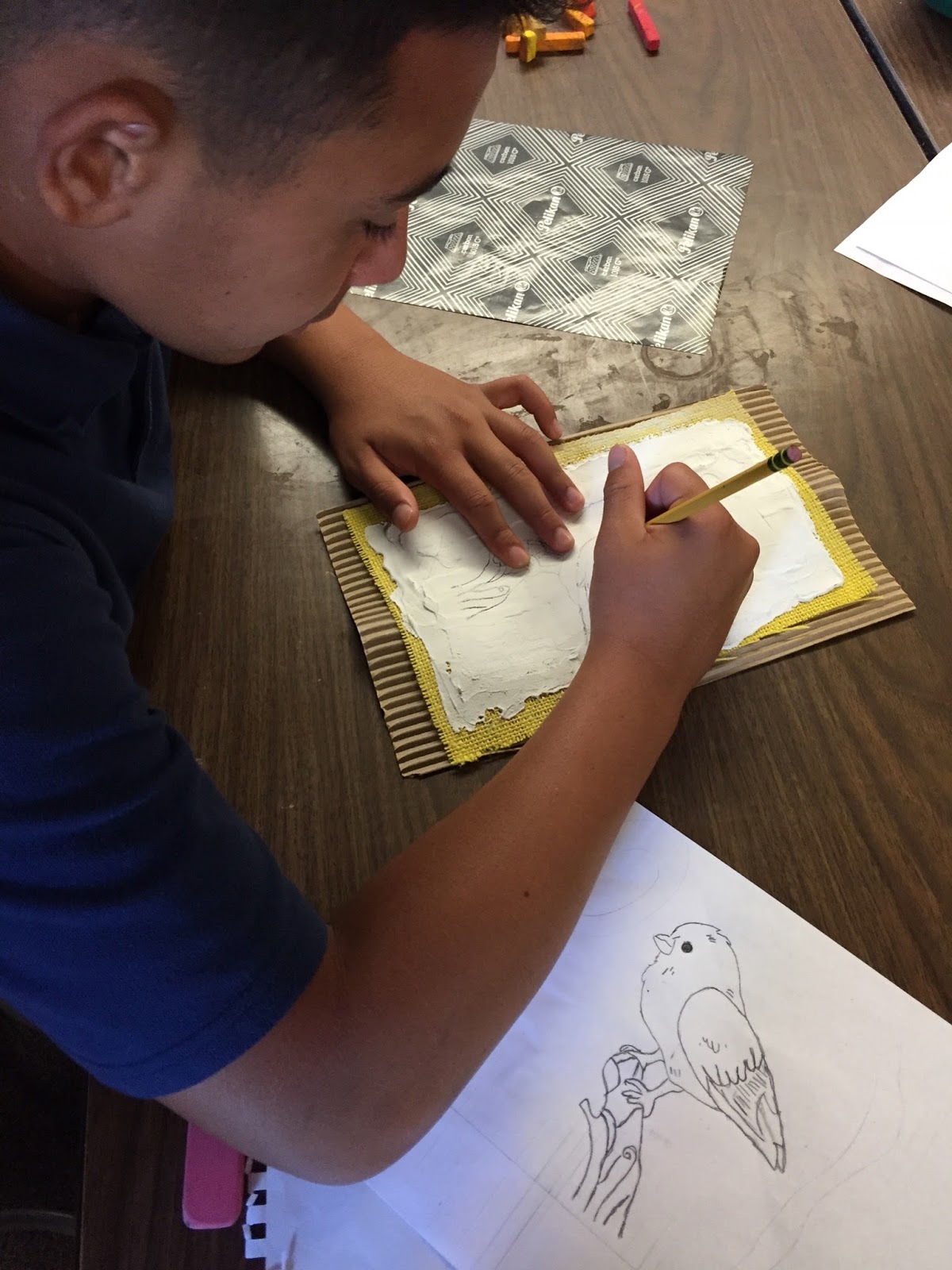
1. Plaster is made and poured onto burlap, then dried.
2. Practice sketches are created.
3. Final sketches are redrawn or traced (using carbon paper) onto their plaster
4. Chalk is applied
5. Chalk is blended and sealed using liquid starch on q-tips or their finger-tips.
***This can be a very frustrating project for perfectionists as the medium is tricky to control and it is difficult to get fine details with the chalk and q-tips. However, I think that the 8th graders did a fine job and we were able to do quite a bit of problem-solving throughout this project.
Things we learned on accident and by trial-and-error through this project:
-Sand paper can be our friend. Mistakes can be sanded away.
-If the plaster flakes and becomes difficult to work on with chalk, markers and paint make fine substitutions.
-Practice sketches that were drawn too small or too large could be downsized or enlarged on a photocopy machine.
-Carbon paper, which many students have never seen before (they had never seen checkbooks with carbon paper or old receipt machines) work well to transfer designs.
Here are some pictures of them working in-class on them.
A little bit about the process:
1. Plaster is made and poured onto burlap, then dried.
2. Practice sketches are created.
3. Final sketches are redrawn or traced (using carbon paper) onto their plaster
4. Chalk is applied
5. Chalk is blended and sealed using liquid starch on q-tips or their finger-tips.
***This can be a very frustrating project for perfectionists as the medium is tricky to control and it is difficult to get fine details with the chalk and q-tips. However, I think that the 8th graders did a fine job and we were able to do quite a bit of problem-solving throughout this project.
Things we learned on accident and by trial-and-error through this project:
-Sand paper can be our friend. Mistakes can be sanded away.
-If the plaster flakes and becomes difficult to work on with chalk, markers and paint make fine substitutions.
-Practice sketches that were drawn too small or too large could be downsized or enlarged on a photocopy machine.
-Carbon paper, which many students have never seen before (they had never seen checkbooks with carbon paper or old receipt machines) work well to transfer designs.
Here are some pictures of them working in-class on them.
Prayer Day in Art Class
As an extension of our Creative Compassion project, students in 4A made thank you cards for "hometown heroes," specifically police officers and firemen. These will be delivered to the local stations to show our appreciation for the sacrifices that these men and women make every day to keep our communities safe. I'll be sure to take some pictures when they are delivered.
Monday, September 11, 2017
Art Enrichment: Creative Compassion Began Today!
6th graders and 7th graders that have Creative Compassion for their enrichment this trimester are working to create projects that will be donated to Lucille Packard Children's Hospital in Palo Alto. Our first project is to create worry dolls that will be given to patients and their families. Students began working on them in-class today and we will finish them up next week. Here are a few that have been completed. Below you will also see the note that will be attached to each worry doll when they are delivered.
8th Grade Frescoes In-Progress
8th graders are in the process of adding chalk images to their plaster frescoes. They are using liquid starch on q-tips to blend the colors of the chalks into the plaster. It is a very challenging medium as it is difficult to get fine detail using the chalk and the fragile nature of the plaster. Here are a few that have been completed.
First Grade Portraits and Painting Exploration!
Here are some completed first grade portraits! Notice their painted backgrounds where they used all sorts of unique tools to paint them with. I'm sure these would be darling framed!!!
Subscribe to:
Posts (Atom)